
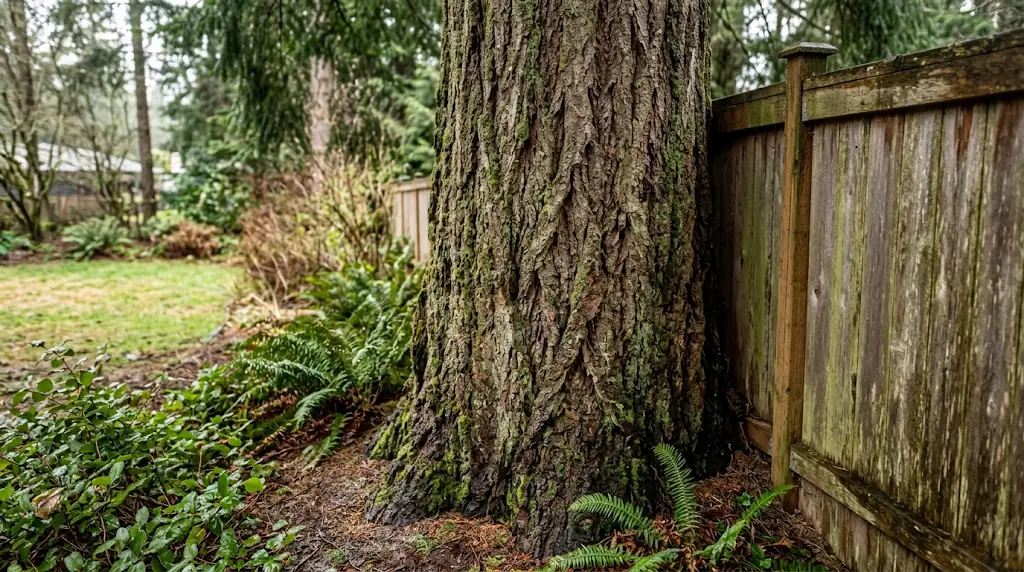
In most cases, you do not need a permit to remove up to 6 trees within a rolling 12-month period on private parcels up to one acre in Auburn, Washington. A city permit is strictly required if the tree grows inside an environmentally critical area or its protective buffer, sits in the public right-of-way, was mandated under an approved development landscape plan, or exceeds annual clearing thresholds.
Auburn City Code 15.74: The Baseline Rule for Private Lots
Auburn regulates tree removal under the city’s clearing, filling, and grading standards. The municipal code grants standard single-family residential lots a specific annual allowance without requiring paperwork, fees, or prior inspections.
According to Auburn City Code 15.74.050(A)(4), private landowners operate under two baseline rules:
- Parcels 1 Acre or Smaller: Property owners may remove up to 6 trees within any consecutive 12-month window without a permit.
- Parcels Larger Than 1 Acre: Property owners may remove up to 6 trees per acre within any consecutive 12-month window without a permit (for example, a 3-acre parcel allows up to 18 trees per year).
This exemption applies strictly to private residential lots where the trees do not fall under special environmental or development designations. The city calculates tree removals on a rolling 12-month timeline, not by calendar year. Cutting 7 or more trees on an acre within 365 days triggers the requirement for a City of Auburn Grading and Land Clearing Permit.
Auburn Tree Removal Permit Decision Matrix
| Property & Tree Scenario | Permit Required? | Governing Authority / Code | Action Required Before Removal |
| Standard residential lot (≤ 1 acre), 1–6 trees | No | Auburn City Code 15.74.050(A)(4) | Confirm parcel boundaries and count. Proceed with standard removal. |
| Standard residential lot, 7+ trees in 12 months | Yes | ACC Chapter 15.74 (Grading & Clearing) | Submit a Land Clearing / Grading Permit application to City Planning. |
| Tree located in a Critical Area or buffer | Yes | ACC Chapter 16.10 (Critical Areas) | Critical area review; requires ISA Certified Arborist evaluation. |
| Tree planted under an approved Landscape Plan | Yes | ACC 15.74 / Planning Approval | City review; requires replanting or a formal plan modification. |
| Tree located in the street planter or Right-of-Way | Yes | ACC Section 12.36 (Public ROW) | Obtain a City of Auburn Construction Permit before starting work. |
| Immediate hazard tree threatening a structure | Conditional | ACC 15.74 / ACC 16.10 | Photo documentation; TRAQ arborist report; notify Planning within 10 days. |
The 4 Situations Where an Auburn Permit Is Mandatory
The 6-tree exemption does not apply uniformly across the city. Four legal conditions override private property rights and mandate municipal permits:
1. Environmentally Critical Areas (ACC Chapter 16.10)
Auburn features distinct topography, including the Green River Valley floor, the White River basin, and steep bluffs climbing toward Lea Hill and West Hill. The city designates six critical area types under ACC Chapter 16.10:
- Geologic Hazard Areas (slopes greater than 15% to 40%, landslide hazard zones, and erosion-prone bluffs)
- Wetlands and associated protective buffers (common along valley floor depressions)
- Streams and riparian corridors (Green River, White River, Mill Creek, and tributary channels)
- Flood Hazard Areas (100-year floodplains and flood storage corridors)
- Wildlife Habitat Networks
- Groundwater Protection Zones
Tree root systems stabilize Auburn’s glacially deposited soils and manage regional stormwater run-off. Cutting any tree inside a critical area or its mandated buffer requires city approval and an arborist report, regardless of trunk diameter.
2. Prior Development or Mitigation Landscape Conditions
Subdivisions built in Auburn over recent decades often include conditions of approval that mandate minimum canopy coverage or specific streetscapes. If your tree was planted or retained as part of a commercial site plan, planned unit development (PUD), or environmental mitigation requirement, it cannot be cut down under the 6-tree exemption. Removing these trees requires City Planning approval and equivalent replacement plantings.
3. Public Right-of-Way and Street Frontage Trees
The strip of land between your front sidewalk and the street curb is public right-of-way (ROW), even if you mow the grass. Under ACC Section 12.36.050, property owners must maintain clearance (8 feet over sidewalks, 14 feet over roads), but you cannot cut down a right-of-way tree without an approved Construction Permit from Auburn Public Works.
4. Clearing More Than 6 Trees Per Acre
Property owners who clear land for new outbuildings, driveways, or yard expansions beyond the 6-tree cap must obtain a formal land clearing and grading permit. Auburn monitors land clearing via King County and Pierce County aerial surveys and code compliance patrols.
Soil, Wind, and Pacific Northwest Weather Realities in Auburn
Auburn averages over 40 inches of rainfall per year, with precipitation heavily concentrated between October and April. This climate creates specific tree risks:
- Saturated Soil Failures: Prolonged winter rain saturates the sandy loam and glacial till soils typical of Lea Hill and the Green River plateau. Mature Douglas firs (Pseudotsuga menziesii) and Western red cedars (Thuja plicata) develop shallow root plates in wet soils.
- November–January Windstorms: Puget Sound windstorms bring wind gusts of 45 to 60+ mph through the Green River gap. Saturated root systems lose friction, making structurally imbalanced or co-dominant stem trees susceptible to windthrow.
- Decay and Laminated Root Rot: Native conifers in King and Pierce counties frequently carry undetected root decay (Phellinus weirii). Trees showing crown dieback or fungal conks near the root flare present severe structural failure risks during winter storms.
Emergency Hazard Removals: What to Do When a Tree Is Imminent Danger
If a tree is split, leaning against power lines, or actively uprooting near your home, public safety takes priority over administrative paperwork.
- Evacuate the Target Zone: Keep family members and vehicles clear of the fall line.
- Clear Power Hazards: If limbs contact power lines, call Puget Sound Energy at 1-888-225-5773 immediately. Do not attempt removal yourself.
- Capture Date-Stamped Photos: Take comprehensive photos of the compromised root plate, trunk cracks, target structures, and the entire tree profile before cutting.
- Deploy a TRAQ-Qualified Crew: Have an ISA Certified Arborist with Tree Risk Assessment Qualification (TRAQ) perform the emergency felling.
- Submit Retroactive Notice: If the tree was within an Auburn Critical Area, submit an emergency removal declaration along with the arborist’s hazard assessment to Auburn Planning Services within 10 days of the incident.
Auburn Tree Removal Verification Checklist
Before starting work, complete this five-step verification:
- [ ] Locate the Parcel Boundary: Verify that the tree trunk sits entirely inside your deeded property lines and not on a neighboring lot, HOA common tract, or city right-of-way.
- [ ] Check Critical Area Maps: Review your parcel on the City of Auburn GIS portal or contact the Auburn Permit Center (253-931-3090 / planning@auburnwa.gov) to verify that your lot has no wetland, stream, or steep slope overlays.
- [ ] Count 12-Month Removals: Confirm that cutting this tree will not exceed the 6-tree-per-acre limit over the past 365 days.
- [ ] Review HOA Covenants: Ensure your neighborhood CC&Rs do not require separate architectural review board (ARB) approval. City code does not override private HOA contracts.
- [ ] Hire a Licensed, Bonded, and Insured Contractor: Verify that your tree service provider maintains an active Washington Department of Labor & Industries contractor registration and carry full commercial general liability coverage.
If you have questions about parcel zoning, hazard evaluations, or municipal clearing limits, Auburn Tree Removal handles complete site inspections, permit assistance, and safe professional removals. Visit our contact page to schedule a site evaluation with a local tree specialist.